허클베리 핀의 모험 학습자료 — AP English·SAT Reading·미국 문학 에세이
영어 원문을 근거로 AP English Literature, SAT Reading, IB English, 미국 학교 에세이까지 연결하는 실전 학습 가이드입니다.
이 학습자료는 미국식 문학 독해와 영어 에세이 작성을 목표로 합니다. 작품 전체 흐름을 먼저 잡고 싶다면 본문 해설을 먼저 읽어도 좋습니다.
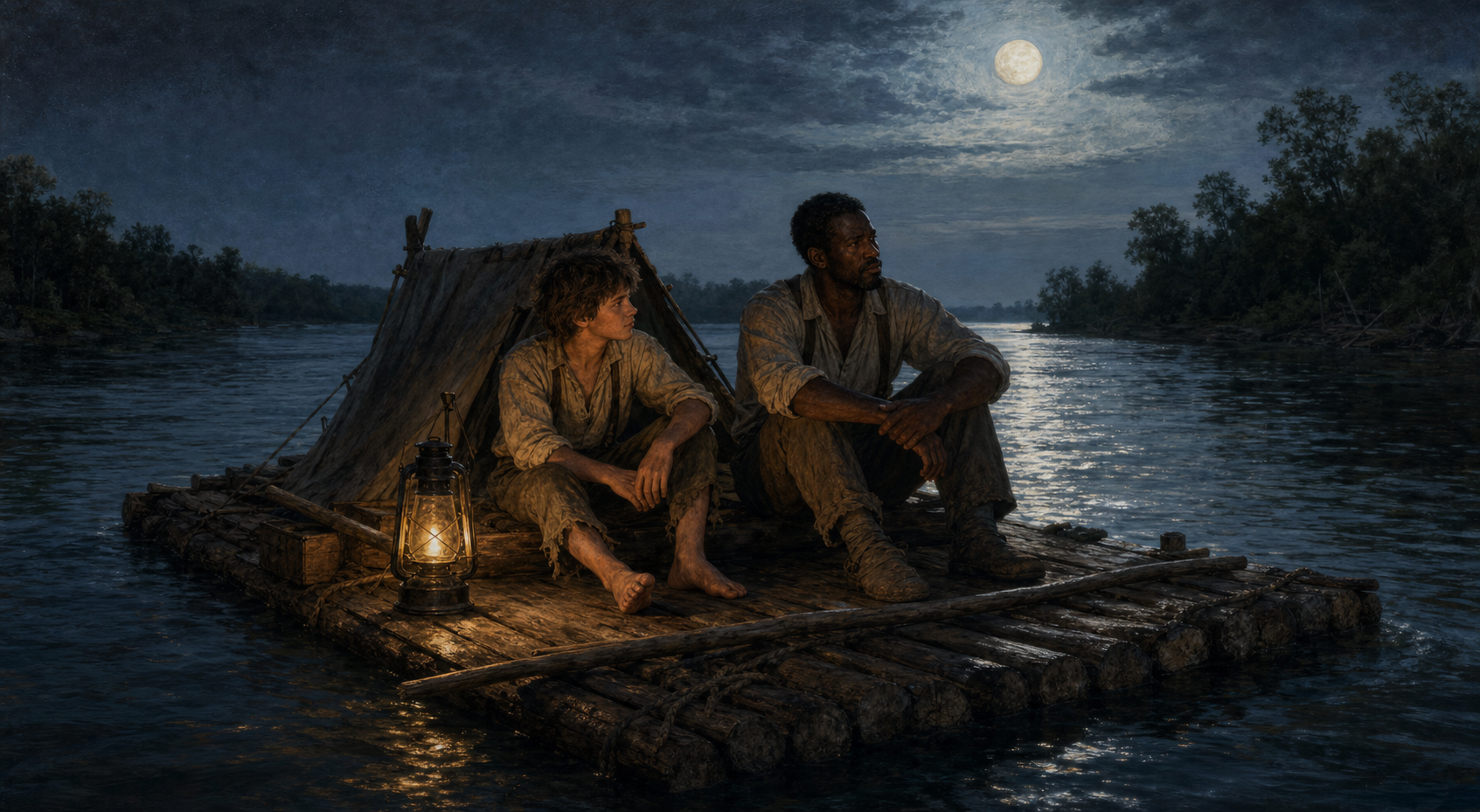
이 자료의 목표
한국어로 설명하지만 목표는 한국 내신식 줄거리 암기가 아닙니다. 미국 문학 수업에서는 허크가 어디로 갔는지보다, 화자·풍자·상징·아이러니·역사적 맥락을 원문 근거로 설명하는 능력을 봅니다.
이 자료는 세 가지를 훈련합니다.
- 허크의 1인칭 방언 화자가 무엇을 보고 무엇을 이해하지 못하는지 구분하기
- 짐을 허크의 조연이 아니라 작품의 윤리적 중심으로 설명하기
- 인종주의와 노예제의 시대 언어를 무비판적으로 반복하지 않고, 작품의 풍자와 한계를 함께 분석하기
1. 미국식 시험에서 왜 중요한가
Adventures of Huckleberry Finn은 미국 문학 수업에서 자주 다뤄지는 작품입니다. 이유는 단순히 유명해서가 아닙니다. 이 작품은 시험에 자주 나오는 요소를 거의 모두 포함합니다.
- Narration: Huck Finn의 제한된 1인칭 화자
- Satire: slavery, religion, family honor, fraud, mobs, romance plots
- Symbolism: Mississippi River, raft, fog, shore
- Character complexity: Huck, Jim, Tom, Pap, Duke and King
- Historical context: antebellum slavery, race, dialect, banned-book debates
좋은 답안은 "Huck learns friendship"에서 끝나지 않습니다. 더 강한 문장은 이렇게 확장됩니다.
Twain makes Huck's moral breakthrough powerful because Huck believes he is choosing sin, while readers recognize that he is rejecting the corrupt conscience taught by a slaveholding society.
한국어로 이해하면: 허크가 "옳은 일"이라고 배운 것이 사실은 노예제 사회가 만든 잘못된 양심이기 때문에, 짐을 돕는 순간이 작품의 윤리적 중심이 됩니다.
2. 빠른 복습
- Original title: Adventures of Huckleberry Finn
- Author: Mark Twain
- Published: 1884 in the United Kingdom; 1885 in the United States
- Setting: antebellum Missouri and the Mississippi River
- Narrator: Huck Finn
- Core conflict: Huck and Jim flee downriver while Huck struggles against slaveholding morality
- Exam focus: conscience, satire, race, freedom, narration, the raft, Tom Sawyer's ending
줄거리는 다음 문장으로 압축할 수 있습니다.
Huck Finn escapes abuse and travels with Jim, an enslaved man seeking freedom, while Twain turns their raft journey into a satire of American society and a test of inherited conscience.
3. 핵심 원문 구절 읽기
아래 Passage들은 단순히 외울 만한 문장이 아닙니다. AP Lit, SAT Reading, IB English, 미국 학교 에세이에서는 짧은 원문도 장면 맥락 -> 단어 선택 -> 화자 한계 -> 작품 전체 의미로 연결해야 합니다.
특히 이 작품은 인종주의적 시대 언어가 포함되어 있으므로, 답안에서 그 표현을 불필요하게 반복하지 않는 것이 좋습니다. 대신 "period racial language", "slaveholding social code", "Huck's inherited conscience"처럼 분석어를 사용하세요.
Passage 1: anti-moral notice
Persons attempting to find a motive in this narrative will be prosecuted.
맥락: 작품 앞부분의 장난스러운 공지문입니다. 트웨인은 독자가 동기, 교훈, 플롯을 찾으려 하면 처벌받을 것처럼 농담합니다.
diction/syntax/tone: prosecuted라는 법률 언어가 해석 행위를 우스운 범죄처럼 만듭니다. 그러나 이 농담은 작품에 도덕이 없다는 뜻이 아닙니다. 오히려 법과 정의가 어긋나는 세계를 미리 암시합니다.
시험 활용: 풍자, 독자와의 관계, 교훈소설 거부, 법과 정의의 분리를 논할 때 쓸 수 있습니다.
Passage 2: Huck's opening voice
You don’t know about me without you have read a book by the name of The Adventures of Tom Sawyer.
맥락: 허크가 독자에게 직접 말을 걸며 자기 이야기를 시작하는 첫 문장입니다.
diction/syntax/tone: 문법은 표준적이지 않지만, 화자의 장악력은 분명합니다. 허크는 교육받은 문장으로 말하지 않지만 독자를 자기 목소리 안으로 끌어들입니다.
시험 활용: 1인칭 화자, vernacular narration, 화자의 한계와 매력을 설명할 때 좋은 출발점입니다.
Passage 3: raft freedom
You feel mighty free and easy and comfortable on a raft.
맥락: 허크가 뗏목 위의 삶을 설명하는 장면입니다. 강기슭의 위험과 비교할 때 뗏목은 숨 쉴 수 있는 공간처럼 느껴집니다.
diction/syntax/tone: free, easy, comfortable은 모두 몸의 감각을 담은 단어입니다. 자유가 추상적 이념이 아니라 실제로 숨 쉬고 눕고 이야기할 수 있는 상태로 제시됩니다.
시험 활용: 뗏목은 완전한 낙원이 아니라 임시 피난처입니다. 답안에서는 뗏목이 허크와 짐의 관계를 가능하게 하지만, 법과 사회의 추적을 끝내지는 못한다는 점을 함께 써야 합니다.
Passage 4: fog and perception
Nothing don’t look natural nor sound natural in a fog.
맥락: 안개 속에서 허크와 짐이 서로를 잃어버리는 장면입니다.
diction/syntax/tone: look과 sound가 함께 나오며 시각과 청각이 모두 흐려집니다. 안개는 물리적 장애물이면서, 허크의 도덕적 혼란을 보여 주는 상징으로 읽을 수 있습니다.
시험 활용: setting, symbol, moral confusion을 연결하기 좋습니다. 안개 이후 허크가 짐에게 거짓말하고 사과하는 흐름까지 이어 쓰면 답안이 강해집니다.
Passage 5: inherited conscience
What’s the use you learning to do right when it’s troublesome to do right?
맥락: 허크가 짐을 신고해야 하는지 고민하는 부분입니다. 그는 자기가 배운 "옳은 일"과 실제 감정 사이에서 흔들립니다.
diction/syntax/tone: 핵심은 learning to do right입니다. 양심이 자연스럽게 옳은 것이 아니라 사회에서 배운 것임을 보여 줍니다. 그리고 그 사회가 노예제 사회라면, 배운 양심 자체가 틀릴 수 있습니다.
시험 활용: law versus justice, social morality, conscience를 논할 때 핵심 근거가 됩니다.
Passage 6: prayer and truth
You can’t pray a lie—I found that out.
맥락: 허크가 짐을 돌려보내는 편지를 쓴 뒤 기도하려고 하지만, 마음속에서 거짓을 감출 수 없다는 것을 깨닫는 순간입니다.
diction/syntax/tone: 문장이 짧고 단호합니다. pray와 lie가 충돌하면서, 형식적 종교보다 진실성이 더 중요하다는 결론이 나옵니다.
시험 활용: 종교적 위선, 진실, 양심, 허크의 윤리적 각성을 설명할 때 사용하세요.
Passage 7: moral climax
All right, then, I’ll go to hell.
맥락: 허크가 짐의 위치를 알리는 편지를 찢고, 짐을 돕기로 결심하는 장면입니다.
diction/syntax/tone: 아주 짧은 말이지만 작품 전체의 아이러니가 들어 있습니다. 허크는 자기가 지옥에 갈 선택을 한다고 생각하지만, 독자는 그것이 가장 인간적인 선택임을 압니다.
시험 활용: AP Lit essay에서 거의 반드시 쓸 수 있는 중심 구절입니다. 단, "Huck becomes perfect"라고 쓰면 약합니다. 허크는 여전히 한계가 있지만, 결정적인 순간에 사회의 거짓 양심을 거부합니다.
Passage 8: human cruelty
Human beings can be awful cruel to one another.
맥락: 공작과 왕이 공개적으로 모욕당하는 장면을 본 허크의 반응입니다. 두 사람은 사기꾼이지만, 군중의 잔인함 역시 문제로 드러납니다.
diction/syntax/tone: Human beings은 특정 인물이나 한 마을을 넘어 인간 일반으로 시야를 넓힙니다. awful cruel은 어린 화자의 단순한 말투지만 판단은 강합니다.
시험 활용: mob behavior, cruelty, satire의 어두운 면을 논할 때 좋습니다. 이 문장은 작품의 코미디가 사람의 고통을 구경거리로 만드는 문화까지 비판함을 보여 줍니다.
4. Close Reading: 허크의 목소리와 거짓 양심 읽기
Adventures of Huckleberry Finn의 close reading은 "허크가 짐을 도와준다"에서 끝나면 약합니다. 이 작품은 허크가 어떤 언어로 세상을 배웠는지, 그 언어가 왜 노예제 사회의 폭력을 정상처럼 보이게 만드는지, 그리고 허크의 경험이 그 언어를 어떻게 흔드는지를 읽어야 합니다. 특히 한국 학생이 미국식 문학 시험에서 답안을 쓸 때는 줄거리 요약보다 voice, irony, setting, satire, moral conflict가 한 장면 안에서 어떻게 함께 작동하는지 보여 주는 것이 중요합니다.
1단계: 장면의 위치를 사회적 압력으로 읽기
허크가 뗏목 위에 있는지, 강기슭 마을에 있는지, 집 안에 있는지, 펠프스 농장에 있는지 먼저 확인하세요. 이 작품에서 장소는 배경 장식이 아니라 사회 규칙의 강도입니다. 강 위의 뗏목은 허크와 짐이 서로를 사람 대 사람으로 경험할 수 있는 임시 공간입니다. 반대로 강기슭의 마을, 가문, 농장, 법적 절차는 노예제와 인종 위계, 종교적 체면, 군중 폭력을 다시 불러옵니다.
예를 들어 뗏목 장면을 읽을 때 "평화롭다"라고만 쓰면 부족합니다. 그 평화가 왜 임시적인지, 왜 shore로 돌아갈 때마다 짐의 위험이 커지는지를 붙여야 합니다. river와 shore의 대비는 자유와 억압의 단순한 이분법이 아니라, 사적인 우정이 공적인 폭력 구조를 완전히 이기지 못하는 긴장으로 읽어야 합니다.
2단계: 허크의 1인칭 vernacular narration을 분석하기
허크의 서술은 표준 문법에서 벗어난 구어체와 철자, 지역 방언, 어린 화자의 직감으로 움직입니다. sivilize처럼 일부러 비표준적으로 보이는 표현은 단순한 오탈자가 아니라, 허크가 "문명화"라는 말을 어떻게 삐딱하게 받아들이는지 보여 줍니다. 그는 어른들의 말을 그대로 배웠지만, 그 말의 도덕적 의미를 끝까지 믿지는 못합니다.
close reading에서 중요한 것은 허크의 말이 언제 믿을 만하고 언제 제한적인지 구분하는 일입니다. 허크는 사람들의 표정, 말투, 위선, 폭력을 날카롭게 관찰합니다. 그러나 노예제 사회가 가르친 인종적 편견과 법적 사고를 완전히 벗어나지는 못합니다. 따라서 좋은 답안은 "Huck is unreliable"이라고만 쓰지 않고, 그의 관찰력과 한계가 동시에 존재한다고 설명합니다.
3단계: 화자의 판단, 사회의 판단, 독자의 판단을 분리하기
이 작품에는 세 층의 판단이 자주 충돌합니다. 첫째, 허크는 자신이 배운 도덕에 따라 짐을 돕는 일을 나쁜 일로 느낄 때가 있습니다. 둘째, 작품 속 사회는 노예제를 법과 종교, 재산 논리로 정당화합니다. 셋째, 독자는 짐의 인간성과 허크의 실제 행동을 보며 그 사회적 도덕이 잘못되었음을 읽어냅니다.
이 세 층을 분리하면 moral irony가 보입니다. 허크가 "양심" 때문에 괴로워한다고 말할 때, 그 양심은 순수한 내면의 목소리가 아니라 사회가 주입한 규칙입니다. 그래서 essay에서는 conscience를 긍정어로만 처리하면 안 됩니다. 이 작품에서 conscience는 성장의 출발점이면서 동시에 오염된 사회적 훈련의 이름입니다.
4단계: 인종화된 언어를 역사적 맥락과 서술 효과로 다루기
이 작품에는 오늘날 그대로 반복하거나 가볍게 사용할 수 없는 시대적 인종차별 언어와 사고방식이 등장합니다. 시험 답안에서는 그 언어를 "현실감 있는 방언"으로만 칭찬하면 위험합니다. 더 정확한 분석은 그 언어가 어떤 사회적 폭력을 정상화하는지, 허크의 한계를 어떻게 드러내는지, 그리고 짐의 인간성이 그 언어가 만든 틀을 어떻게 넘어서는지 설명하는 것입니다.
짐을 분석할 때도 "Huck learns from Jim"만 쓰면 짐을 허크 성장의 도구로 줄일 수 있습니다. 짐은 가족을 그리워하고, 허크를 돌보고, 위험을 판단하고, 자신의 자유를 원합니다. 그의 humanity는 허크가 깨닫는 대상이기도 하지만, 그 이전에 이미 작품 안에서 독립적으로 존재하는 윤리적 기준입니다.
5단계: 짧은 문장의 syntax와 tone을 놓치지 않기
트웨인의 강한 장면은 길고 화려한 문장이 아니라 짧은 구어체 문장에서 나오는 경우가 많습니다. 허크가 편지를 찢는 장면의 All right, then, I'll go to hell.은 문법적으로 단순하지만, 작품 전체의 도덕 구조를 뒤집습니다. All right, then은 체념과 결심이 동시에 들리는 말이고, I'll go to hell은 허크가 상상하는 가장 무거운 종교적 처벌입니다.
하지만 독자는 허크와 반대로 읽습니다. 허크는 자신이 죄를 택한다고 믿지만, 독자는 그 선택이 짐의 자유와 인간성을 인정하는 순간임을 압니다. 이때 irony는 농담이 아니라 사회가 가르친 moral vocabulary 자체가 뒤집히는 구조입니다.
Worked example 1: the letter and the moral crisis
Literal situation: 허크는 짐의 위치를 알리는 편지를 썼다가, 짐과 함께한 시간을 떠올리고 편지를 찢습니다.
Key evidence: All right, then, I'll go to hell.
Device: first-person vernacular narration, dramatic irony, moral inversion, compressed syntax.
Close reading: 문장은 짧고 말투는 투박하지만, hell이라는 단어는 허크가 사회와 종교의 처벌을 실제로 두려워한다는 점을 보여 줍니다. 동시에 All right, then은 누군가에게 멋지게 선언하는 영웅적 문장이 아니라, 혼자 결론을 내리는 아이의 말입니다. 이 낮은 문체 때문에 장면은 더 강합니다. 허크는 자기를 훌륭한 사람으로 포장하지 않고, 오히려 나쁜 사람이 되겠다고 믿으면서 짐을 배신하지 않습니다.
Essay sentence: Twain makes Huck mistake moral courage for damnation, exposing how deeply a slaveholding society has corrupted the language of conscience.
Worked example 2: river peace and shore violence
Literal situation: 허크와 짐은 밤의 강 위에서 잠시 자유롭게 움직이지만, 강기슭으로 가까워질 때마다 추적, 사기, 폭력, 법적 위험이 돌아옵니다.
Key contrast: raft vs. shore, movement vs. surveillance, private loyalty vs. public law.
Close reading: 강은 완전한 해방 공간이 아닙니다. 카이로를 놓치는 사건처럼 강의 흐름은 자유의 길을 열어 주면서도 두 사람을 더 위험한 남부 공간으로 데려갑니다. 따라서 river를 단순히 freedom의 상징으로 쓰면 장면의 복잡성을 놓칩니다. 강은 가능성의 공간이지만, 노예제의 법과 사회가 사라진 공간은 아닙니다.
Essay sentence: The river creates a temporary refuge where Huck can recognize Jim's humanity, but each return to the shore reveals the continued power of law, racial hierarchy, and public surveillance.
Worked example 3: fraud episodes and social performance
Literal situation: 공작과 왕은 여러 마을에서 공연, 가짜 신분, 감정 연기를 이용해 사람들을 속입니다.
Device: satire, performance motif, crowd irony.
Close reading: 사기꾼들은 혼자 성공하지 않습니다. 사람들이 보고 싶어 하는 이야기, 믿고 싶어 하는 신분, 즐기고 싶어 하는 공연이 있기 때문에 사기가 작동합니다. Wilks episode에서 허크가 사기에 맞서려는 이유도 단순히 "도둑질이 나쁘다"가 아니라, 무고한 사람들이 슬픔과 신뢰를 이용당하는 장면을 보았기 때문입니다. 이때 satire는 웃긴 인물 묘사가 아니라 공동체 전체의 판단력 실패를 드러냅니다.
Essay sentence: Twain uses the duke and king to show that fraud is not only individual dishonesty but a social performance sustained by audience desire and communal gullibility.
답안 점검 순서
- 장면이 river인지 shore인지 먼저 쓴다.
- 허크가 무엇을 말한다고 생각하는지와 독자가 무엇을 읽어야 하는지를 분리한다.
conscience,free,right,cruel,sivilize,lie같은 핵심 단어를 주제와 연결한다.- 인종차별적 사회 구조를 분석하되, 차별 언어 자체를 불필요하게 반복하지 않는다.
- 마지막 문장은 작품 전체의 질문으로 확장한다: What does this scene reveal about freedom, social morality, and human recognition?
5. Literary Devices: 허클베리 핀 답안에 바로 쓰는 장치들
Literary devices는 장식용 용어 목록이 아닙니다. 이 작품에서는 장치 하나가 곧 윤리적 질문입니다. 허크의 말투는 단순한 지역색이 아니라 제한된 화자의 도덕 교육을 보여 주고, 강과 강기슭의 대비는 자유의 가능성과 한계를 동시에 드러내며, 풍자는 "문명화된 사회"가 실제로 얼마나 폭력적이고 위선적인지를 폭로합니다. 아래 장치들은 반드시 장면 근거와 essay use까지 함께 익히세요.
1. First-person vernacular narration: 허크의 말투
장면 근거: 첫 문장부터 허크는 자신이 이미 알려진 이야기 속 인물이라고 말하며, 표준 문어체가 아니라 구어체와 방언에 가까운 목소리로 서술합니다. 그는 어른들의 학교식 언어보다 자기 귀와 경험을 믿는 방식으로 세계를 설명합니다.
효과: 이 말투는 친밀감과 속도를 만들지만, 동시에 독자가 허크의 한계를 읽게 만듭니다. 허크가 인물의 위선을 정확히 보면서도 노예제 사회의 도덕 언어를 그대로 반복할 때, 독자는 서술자와 작가의 판단 사이의 거리를 감지해야 합니다.
에세이 활용 문장: Huck's vernacular narration creates intimacy while exposing the limits of a child whose moral vocabulary has been shaped by a racist society.
2. Dramatic irony: 허크가 죄라고 믿는 선한 선택
장면 근거: 편지를 찢고 짐을 돕기로 하는 장면에서 허크는 자신이 지옥을 택한다고 생각합니다.
효과: 독자는 허크와 반대로 판단합니다. 허크가 죄라고 부르는 선택이 사실은 작품에서 가장 윤리적인 선택입니다. 이 irony는 개인의 착한 마음만이 아니라, 사회가 도덕 언어를 얼마나 잘못 가르쳤는지를 비판합니다.
에세이 활용 문장: Twain's dramatic irony turns Huck's fear of sin into evidence against the society that taught him to confuse justice with wrongdoing.
3. Symbolism: river and raft
장면 근거: 허크와 짐은 뗏목 위에서 대화하고 이동하며, 강을 따라 카이로와 자유주로 향하려고 합니다.
효과: 강은 freedom의 상징이지만, 완전한 해방의 상징은 아닙니다. 뗏목은 둘의 관계를 새롭게 만드는 임시 피난처이고, 강의 흐름은 자유를 향한 길이면서도 실수와 위험을 함께 가져옵니다. 카이로를 놓치는 사건은 상징이 낭만만이 아니라 역사적 현실과 충돌한다는 점을 보여 줍니다.
에세이 활용 문장: The raft symbolizes a temporary moral refuge, but its vulnerability shows that private friendship cannot erase the public power of slavery.
4. Setting contrast: shore society
장면 근거: Grangerford 집안, 사기 공연이 벌어지는 마을, Wilks 가족의 집, Phelps farm은 모두 강기슭 사회의 서로 다른 얼굴입니다.
효과: shore는 문명, 가족, 종교, 법처럼 보이지만 실제로는 폭력과 감시, 위선과 공연을 품고 있습니다. Grangerford feud는 세련된 집과 예절이 오래된 살인을 막지 못한다는 점을 보여 주고, Phelps farm은 결말부에서 짐의 자유가 놀이와 절차 속에 지연되는 공간이 됩니다.
에세이 활용 문장: Twain makes the shore a map of social power, where respectable institutions repeatedly reveal violence beneath the language of civilization.
5. Satire: civilized society의 위선
장면 근거: Widow Douglas의 교화, Sunday school, Grangerford 가문의 종교적 체면, 공작과 왕의 공연, Tom Sawyer의 모험 규칙이 모두 풍자의 대상이 됩니다.
효과: 트웨인의 풍자는 웃음으로 시작하지만 불편한 판단으로 끝납니다. "문명화"를 말하는 사회가 실제로는 노예제, 가문 폭력, 군중 잔인함, 사기 공연을 허용한다면, 독자는 문명이라는 단어 자체를 의심해야 합니다.
에세이 활용 문장: Twain's satire exposes civilization as a performance that can hide cruelty, racial injustice, and moral cowardice behind respectable language.
6. Characterization: Jim's humanity
장면 근거: 짐은 가족을 그리워하고, 허크를 돌보고, 안개 장면에서 거짓말 때문에 상처받으며, 자유를 추상적 개념이 아니라 가족과 자기 몸의 주권으로 원합니다.
효과: 짐은 허크의 성장만을 위한 장치가 아닙니다. 그의 돌봄, 슬픔, 판단, 기억은 작품의 윤리적 중심을 만듭니다. race-sensitive한 답안은 짐을 "선한 조력자"로만 줄이지 않고, 그가 이미 온전한 인간으로 존재한다는 점을 분석해야 합니다.
에세이 활용 문장: Jim's care for Huck and longing for his family make him the novel's ethical center, challenging every social system that tries to treat him as property.
7. Motif: lying and storytelling
장면 근거: 허크는 짐을 보호하거나 살아남기 위해 거짓말을 하고, 공작과 왕은 사람들을 착취하기 위해 거짓 신분을 꾸미며, 톰은 책에서 읽은 모험담을 현실에 강요합니다.
효과: 이 작품에서 lying은 하나의 뜻만 갖지 않습니다. 허크의 거짓말은 때로 생존과 보호의 윤리를 갖지만, 사기꾼들의 거짓말은 타인의 슬픔과 신뢰를 돈으로 바꾸는 착취입니다. 톰의 이야기 만들기는 결말부에서 짐의 현실적 자유를 소년들의 놀이로 바꿔 버립니다.
에세이 활용 문장: By comparing protective lies, exploitative fraud, and romantic make-believe, Twain asks whether storytelling serves human need or turns people into props.
8. Fraud and performance: duke and king episodes
장면 근거: 두 사기꾼은 왕족 행세, 공연, 종교적 감정, 가족 상속 문제를 이용해 돈을 얻으려 합니다.
효과: fraud episodes는 중간부의 가벼운 모험담이 아닙니다. 이 장면들은 사람들이 권위 있는 말투, 감정 연기, 군중 분위기에 얼마나 쉽게 끌리는지 보여 줍니다. Wilks episode에서 허크가 사기를 막으려 할 때, 그의 윤리적 판단은 짐과의 관계를 넘어 다른 피해자들에게까지 넓어집니다.
에세이 활용 문장: The duke and king episodes turn comic fraud into social criticism, showing how communities help create the performances that exploit them.
9. Foil: Huck and Tom
장면 근거: 허크는 실제 위험 속에서 즉흥적으로 판단하지만, 톰은 책에서 읽은 탈출 규칙과 모험 장치를 고집합니다.
효과: 두 소년은 모두 이야기와 모험을 좋아하지만 윤리적 무게가 다릅니다. 허크의 상상력은 위험한 사람을 보호하려는 방향으로 움직일 때가 있고, 톰의 상상력은 짐의 고통을 장식적인 게임으로 바꿉니다. 이 foil은 결말부의 불편함을 설명하는 핵심 근거입니다.
에세이 활용 문장: Huck and Tom function as foils because Huck improvises under moral pressure while Tom turns another person's freedom into literary play.
Device 10: Moral inversion and unreliable social morality
장면 근거: 작품 속 사회는 짐을 재산처럼 다루는 법을 정상으로 여기고, 허크는 그 사회가 가르친 기준 때문에 짐을 돕는 일을 죄로 느낍니다.
효과: 일반적인 unreliable narrator 분석은 "화자가 거짓말한다"에 초점을 둡니다. 하지만 이 작품에서 더 중요한 것은 social morality itself is unreliable이라는 점입니다. 허크 개인만 틀리는 것이 아니라, 그가 물려받은 법, 종교, 예절, 인종 질서가 틀렸습니다.
에세이 활용 문장: Twain makes social morality itself unreliable, forcing readers to judge the gap between what the culture calls right and what human recognition demands.
device -> scene evidence -> local effect -> larger ethical question
이 순서를 지키면 Literary Devices가 암기 목록이 아니라 실제 essay의 논리 구조가 됩니다. 특히 이 작품에서는 장치를 말할 때마다 "이 장치가 허크와 짐의 관계, 노예제 사회의 도덕 언어, 문명 풍자의 방향을 어떻게 바꾸는가"까지 연결해야 합니다.
6. 인물 분석을 Essay 문장으로 바꾸기
Huck Finn
limited narrator and ethical learner
한국어 핵심: 허크는 처음부터 완벽한 도덕적 영웅이 아닙니다. 그는 노예제 사회가 가르친 편견을 갖고 있지만, 짐과의 실제 경험을 통해 그 양심을 의심하게 됩니다.
Essay sentence: Huck's moral growth matters because Twain shows both his compassion and the corrupt conscience he has inherited from a slaveholding world.
Jim
moral center and fugitive father
한국어 핵심: 짐은 자유와 가족을 원합니다. 그는 허크를 돌보고, 위험 속에서도 인간적 책임을 보여 주며, 작품의 윤리적 기준이 됩니다.
Essay sentence: Jim's dignity and family love expose the brutality of a society that treats him as property.
Tom Sawyer
romance imagination without responsibility
한국어 핵심: 톰은 책에서 읽은 모험 규칙을 현실에 적용합니다. 결말부에서 그 상상력은 짐에게 실제 고통을 줍니다.
Essay sentence: Tom reveals how storytelling becomes unethical when style matters more than another person's freedom.
Pap Finn
violent resentment and failed authority
한국어 핵심: 팹은 학교와 법을 싫어하지만 자유로운 사람이 아닙니다. 그는 허크를 지배하고 인종주의로 자기 우월감을 만들려 합니다.
Essay sentence: Pap exposes the emptiness of white authority when it depends only on violence, resentment, and racial domination.
Duke and King
fraud as social performance
한국어 핵심: 두 사기꾼은 사람들이 믿고 싶어 하는 이야기를 팔아 돈을 법니다. 그들의 거짓말은 군중과 사회의 약점을 드러냅니다.
Essay sentence: The duke and king show that fraud succeeds when communities prefer performance to truth.
7. 주제별 Thesis 만들기
Conscience
Social Morality vs. Ethical Loyalty
Weak: Huck has a conscience.
Strong: Twain presents Huck's conscience as socially damaged, making his loyalty to Jim powerful because it rejects what he has been taught to call right.
Freedom
River Space and Legal Reality
Weak: The river means freedom.
Strong: The raft creates a temporary moral refuge, but Jim's legal danger shows that private escape cannot erase slavery's public power.
Satire
Comedy with Consequences
Weak: The book is funny.
Strong: Twain's comedy exposes cruelty by making feuds, frauds, mobs, and romantic adventure look absurd before revealing their human cost.
Narration
The Gap Between Huck and Twain
Weak: Huck tells the story.
Strong: Huck's limited voice creates irony because readers can recognize moral truths that Huck's inherited language cannot fully name.
8. SAT Reading Sample
아래 문제는 공식 시험 문제가 아니라, 작품 원문과 시험 유형을 바탕으로 만든 SAT Reading 스타일 연습문제입니다. 질문, 보기, Answer: X. 표기는 영어로 두고, 해설은 한국어로 정리했습니다.
Question 1
In the novel, the raft most strongly functions as:
- A. proof that Huck prefers nature because he has no moral conflicts
- B. a temporary space where Huck and Jim can build trust outside ordinary social rules
- C. a symbol that the Mississippi River has no danger for careful travelers
- D. evidence that Twain values adventure more than social criticism
Answer: B. 뗏목은 허크와 짐이 사회의 규칙에서 잠시 벗어나 서로를 돌보는 공간입니다. 하지만 완전한 낙원은 아니므로, 위험이 없다는 보기나 사회비판보다 모험만 중요하다는 보기는 작품 전체와 맞지 않습니다.
Question 2
The opening mock notice mainly suggests that Twain:
- A. wants readers to ignore all ethical questions in the novel
- B. believes the book has no structure worth analyzing
- C. is warning teachers not to assign the novel
- D. uses comic anti-interpretation to prepare a satire that still has moral force
Answer: D. 공지문은 해석을 금지하는 농담처럼 보이지만, 실제 작품은 강한 도덕적 질문을 던집니다. 따라서 문자 그대로 교훈이 없다는 뜻이 아니라, 풍자적 장난으로 독자를 끌어들이는 장치로 보아야 합니다.
Question 3
Huck's narration is best described as:
- A. limited, colloquial, and often more revealing than Huck understands
- B. omniscient, polished, and historically detached
- C. symbolic but free of social prejudice
- D. unreliable because every event he reports is false
Answer: A. 허크의 말투는 구어적이고 제한되어 있지만, 바로 그 한계 때문에 독자가 더 깊은 의미를 읽어낼 수 있습니다. 전지적이거나 편견이 전혀 없는 화자가 아니며, 모든 사건이 거짓이라는 뜻도 아닙니다.
Question 4
The fog episode is important because it:
- A. proves that Jim is unable to navigate the river
- B. removes all symbolic meaning from the landscape
- C. turns physical disorientation into a test of Huck's honesty toward Jim
- D. shows that the river is safer than the shore in every situation
Answer: C. 안개는 길을 잃는 물리적 사건이지만, 이후 허크가 짐을 속이고 사과하는 흐름을 통해 정직과 관계의 시험이 됩니다. 짐의 무능이나 강의 절대적 안전을 증명하는 장면이 아닙니다.
Question 5
Which statement best captures Jim's role in the novel?
- A. He exists mainly to make Huck's adventures more exciting.
- B. He is comic relief with little influence on the novel's ethics.
- C. He is the emotional and moral center whose humanity challenges Huck's inherited beliefs.
- D. He represents a purely symbolic idea of nature without personal motives.
Answer: C. 짐은 허크의 모험을 꾸미는 조연이 아니라, 가족과 자유를 원하는 인물이며 허크의 잘못 배운 양심을 흔드는 윤리적 중심입니다. 상징만으로 축소하면 작품의 핵심을 놓칩니다.
Question 6
Pap Finn's scenes most directly criticize:
- A. violent white resentment and the emptiness of authority without care
- B. formal education because learning always corrupts children
- C. river life because it produces poverty
- D. Jim's plan to escape from Miss Watson
Answer: A. 팹은 허크를 돌보지 않으면서 지배하려 하고, 교육과 흑인의 존엄을 증오합니다. 작품은 그를 통해 돌봄 없는 백인 권위가 폭력과 원한으로만 남는 모습을 비판합니다.
Question 7
The duke and the king help Twain explore:
- A. the nobility of European aristocracy in America
- B. why theater is morally superior to religion
- C. how Huck becomes wealthy through performance
- D. fraud, public gullibility, and the social appetite for comforting stories
Answer: D. 공작과 왕은 사람들이 믿고 싶어 하는 이야기와 감정을 이용합니다. 귀족의 고귀함이나 연극의 우월성을 말하는 장면이 아니라, 사기와 군중 심리를 풍자하는 장면입니다.
Question 8
Huck's decision to tear up the letter is ironic because:
- A. he has already forgotten who Jim is
- B. he thinks he is choosing sin when readers see him choosing loyalty
- C. Miss Watson asked him to help Jim escape
- D. Tom Sawyer has already explained the law to him
Answer: B. 허크는 자신이 죄를 짓는다고 믿지만, 독자는 그가 짐에 대한 충실함과 인간성을 선택하고 있음을 압니다. 이 반전이 작품의 핵심 아이러니입니다.
Question 9
The Grangerford feud mainly satirizes:
- A. inherited codes of honor that hide senseless violence beneath gentility
- B. Huck's inability to appreciate fine houses
- C. Jim's lack of interest in family history
- D. the Mississippi River's economic importance
Answer: A. 그레인저퍼드 가문은 세련되어 보이지만 오래된 명예 규칙 때문에 아이들까지 죽이는 폭력을 이어 갑니다. 훌륭한 집을 몰라보는 허크의 문제가 아니라, 교양으로 포장된 폭력의 풍자입니다.
Question 10
Why is Tom Sawyer's ending morally troubling?
- A. Tom refuses to read any adventure books.
- B. Tom tells Huck to abandon Jim immediately.
- C. Tom turns Jim's captivity into a game despite knowing the rescue is unnecessary.
- D. Tom is the only character who recognizes Jim's legal freedom.
Answer: C. 톰은 짐이 이미 자유인이라는 사실을 알고도 탈출을 모험놀이로 만듭니다. 그래서 결말부의 코미디는 짐의 자유와 고통을 장난으로 소비한다는 불편함을 남깁니다.
Question 11
The river is best interpreted as:
- A. a simple paradise untouched by history
- B. a route that offers temporary refuge while still carrying Huck and Jim through danger
- C. a symbol of industrial progress only
- D. a place where Huck never has to lie
Answer: B. 강은 허크와 짐에게 숨 쉴 공간을 주지만, 안개와 증기선, 카이로를 놓치는 일, 강기슭 사회와의 충돌을 계속 가져옵니다. 따라서 역사 밖의 낙원으로 보면 너무 단순합니다.
Question 12
The phrase "You can't pray a lie" suggests that:
- A. Huck has become a formal theologian
- B. prayer is shown as useless in every case
- C. Jim has taught Huck a church doctrine
- D. spiritual truth requires honesty that social religion may fail to provide
Answer: D. 허크는 공식 종교 교육보다 마음속 진실을 통해 배웁니다. 짐을 배신하는 상태에서는 기도도 거짓이 되기 때문에, 이 문장은 형식적 종교와 진실한 양심의 차이를 보여 줍니다.
Question 13
Twain's satire differs from simple comedy because it:
- A. uses humor to expose cruelty, hypocrisy, and false moral systems
- B. avoids all painful subjects
- C. rewards every dishonest character
- D. removes the reader's need to judge events
Answer: A. 트웨인의 웃음은 가벼운 장난에서 끝나지 않습니다. 그 웃음은 가문 폭력, 사기, 군중의 잔인함, 노예제의 도덕 논리를 드러내는 방식으로 작동합니다.
Question 14
Which reading of Huck's conscience is most defensible?
- A. Huck's conscience is always correct because it is instinctive.
- B. Huck has no conscience until Tom tells him what to do.
- C. Huck's conscience has been shaped by slavery, so his moral growth requires resisting what he was taught.
- D. Huck's conscience is irrelevant because the novel is only about travel.
Answer: C. 허크의 양심은 노예제 사회가 가르친 것이기 때문에 자주 잘못 작동합니다. 그의 성장은 본능적으로 항상 옳아서가 아니라, 배운 기준을 의심하기 시작해서 중요합니다.
Question 15
The Wilks episode develops Huck by showing him:
- A. becoming more committed to the duke and king
- B. choosing to expose a fraud because he recognizes the harm done to vulnerable people
- C. deciding that all lying is equally moral
- D. rejecting Mary Jane because she is too sentimental
Answer: B. 윌크스 자매를 속이는 사기를 보며 허크는 피해자를 보호하려는 쪽으로 움직입니다. 이 장면은 나중에 짐을 위해 위험을 감수하는 선택의 전 단계로 볼 수 있습니다.
Question 16
A strong reading of Jim should emphasize that:
- A. he has no goals beyond helping Huck
- B. his family love, fear of sale, and acts of care make him a full moral presence
- C. he is less important than the duke and king
- D. he functions only as a symbol of the river
Answer: B. 짐은 허크를 돕기 위해서만 존재하지 않습니다. 가족을 지키고 싶어 하고, 팔려 갈 두려움을 느끼며, 위험 속에서도 돌봄을 실천하는 인물로 읽어야 합니다.
Question 17
The repeated contrast between shore and raft primarily supports which idea?
- A. All homes in the novel are safe.
- B. Nature automatically fixes injustice.
- C. Social spaces on shore often restore surveillance, violence, property, and performance.
- D. The raft is dangerous only because Jim is present.
Answer: C. 강기슭의 집과 마을은 감시, 법, 폭력, 소유의 질서를 되살립니다. 뗏목은 잠시 다른 관계를 가능하게 하지만, 자연이 자동으로 부정의를 해결하는 것은 아닙니다.
Question 18
Which best describes the novel's use of dialect?
- A. It should be ignored because it has no literary function.
- B. It makes every character equally reliable.
- C. It is only used for jokes with no social meaning.
- D. It creates voice and social texture, while requiring careful discussion of racial representation.
Answer: D. 방언은 인물의 목소리와 지역성을 만들지만, 특히 인종화된 말투 재현은 조심스럽게 분석해야 합니다. 문학적 기능이 없거나 단순 농담이라고 보는 것은 부족합니다.
Question 19
The line about human cruelty after the punishment of the con men mainly shows Huck:
- A. recognizing that even guilty people can become victims of mob pleasure
- B. deciding that the duke and king were innocent all along
- C. concluding that crowds are always legally correct
- D. forgetting the frauds committed against the Wilks family
Answer: A. 허크는 공작과 왕의 사기를 잊거나 용서하는 것이 아니라, 군중이 처벌과 모욕을 즐기는 장면 자체에 불편함을 느낍니다. 이는 작품의 군중 비판과 연결됩니다.
Question 20
The best reason to read the ending as unresolved is that:
- A. Huck never leaves Missouri at any point in the novel.
- B. Jim's legal freedom is revealed, but the process has still subjected him to manipulation and danger.
- C. Tom refuses to participate in the plot.
- D. Pap returns and controls Huck's money again.
Answer: B. 결말에서 짐의 법적 자유는 확인되지만, 그 과정에서 그는 톰의 모험놀이와 백인 인물들의 무책임함에 다시 이용됩니다. 그래서 결말은 단순한 해피엔딩이 아니라 불편한 여운을 남깁니다.
9. AP Lit Essay Questions
Essay Question 1
Analyze how Twain uses Huck's first-person narration to create both intimacy and moral distance. How does the reader learn to see more than Huck can fully explain?
Essay Question 2
Choose one river scene and one shore scene. Explain how setting shapes the moral choices available to Huck and Jim.
Essay Question 3
Analyze Jim's role as the novel's ethical center. How do his actions challenge the values Huck has inherited?
Essay Question 4
Discuss the novel's treatment of "civilization." How do households, churches, families, or towns expose the gap between manners and morality?
Essay Question 5
Analyze the function of satire in one comic episode that becomes ethically serious. What social belief or behavior does Twain expose?
Essay Question 6
Compare Huck and Tom as storytellers. How does the novel distinguish improvisation for survival from romance playacting that harms others?
Essay Question 7
Examine the fog episode as a test of perception, language, and relationship. How does the scene move Huck's moral development forward?
Essay Question 8
Analyze the Grangerford feud as a critique of inherited honor. How does Twain use beauty, religion, or family pride to intensify the violence?
Essay Question 9
Discuss the duke and king as figures of fraud. How do their scams reveal weaknesses in the communities they exploit?
Essay Question 10
Analyze Huck's "go to hell" decision. How does Twain use irony to separate social conscience from ethical action?
Essay Question 11
Choose a recurring form of lying in the novel. Explain how Twain distinguishes protective deception, exploitative fraud, and theatrical fantasy.
Essay Question 12
Discuss the Mississippi River as both symbol and structure. How does the movement of the river shape the novel's episodes and themes?
Essay Question 13
Analyze Pap Finn's role in the novel's critique of race, authority, and freedom. Why is Pap's anti-civilization not genuine liberty?
Essay Question 14
Examine how Twain represents childhood. How does Huck's age make him vulnerable, perceptive, and morally unstable?
Essay Question 15
Analyze the ending at the Phelps farm. Does the comic rescue plot weaken the novel's moral force, sharpen it, or do both at once?
Essay Question 16
Discuss the role of public crowds in the novel. How do mobs, audiences, funeral gatherings, or townspeople reveal collective moral weakness?
Essay Question 17
Explore the tension between law and justice in the novel. Use Jim's escape and Huck's decisions as central evidence.
Essay Question 18
Analyze how Twain uses dialect and vernacular style to create character, realism, satire, and interpretive difficulty.
Essay Question 19
Choose one moment when Huck feels shame. Explain whether that shame reflects moral growth, social conditioning, or both.
Essay Question 20
Discuss the final plan to "light out" for the Territory. What does Huck want to escape, and what questions remain unresolved?
10. Model Thesis Bank
아래 thesis는 그대로 외우기보다 질문에 맞게 변형해 쓰는 모델입니다.
- Twain uses Huck's mistaken sense of sin to expose a society in which conscience has been trained to defend slavery rather than justice.
- The raft functions as a temporary moral refuge where Huck can experience Jim's humanity, but its fragility shows that private friendship cannot abolish public systems.
- Jim's care for Huck and longing for his family make him the novel's ethical center, challenging every social rule that tries to reduce him to property.
- Huck's vernacular narration creates humor and intimacy while forcing readers to interpret beyond the limits of his prejudiced childhood perspective.
- The Grangerford feud turns gentility into satire, revealing how beauty, religion, and family pride can decorate inherited violence.
- Twain's comedy is ethically sharp because absurd episodes often uncover cruelty that polite language tries to hide.
- Pap Finn represents not freedom but domination, showing that rebellion against school and law can still serve racial and domestic tyranny.
- The fog episode transforms a navigation problem into a moral lesson about trust, shame, and the harm caused by Huck's playful deception.
- The duke and king reveal fraud as a social collaboration, succeeding because audiences help believe the performances that exploit them.
- Huck and Tom contrast real moral improvisation with bookish adventure fantasy, a difference that becomes disturbing when Jim's freedom is at stake.
- Twain uses the shore to restore social surveillance and violence, making each return from the raft a return to systems Huck cannot easily escape.
- The novel separates law from justice by showing that Jim's legal status is morally indefensible even when characters call it ordinary.
- Huck's shame is double-edged: it sometimes reflects growing empathy, but it also shows how deeply racist social values have entered his conscience.
- The Phelps farm ending unsettles readers because legal freedom arrives only after Jim has been made the object of unnecessary theatrical suffering.
- Twain's use of dialect creates a powerful illusion of spoken immediacy while also demanding careful attention to racial representation and narrative framing.
- The Wilks episode marks Huck's growing willingness to act against fraud when he sees innocent people being harmed.
- Public crowds in the novel often convert entertainment into cruelty, exposing collective moral failure rather than democratic wisdom.
- The Mississippi River structures the novel as a chain of moral tests, each drift downstream bringing both escape and renewed entanglement.
- Huck's final desire to leave for the Territory shows his resistance to confinement, but it cannot fully resolve the national problems the novel has exposed.
- Twain makes Jim's humanity the standard by which "civilized" society is judged and repeatedly found wanting.
11. Essay Vocabulary
- vernacular narration: 일상 구어체에 가까운 화자 문체
- satire: 사회의 실패를 드러내는 풍자
- moral inversion: 사회가 옳고 그름을 뒤집어 가르치는 구조
- inherited conscience: 가족, 법, 종교, 문화에서 물려받은 양심
- ethical awakening: 더 깊은 윤리 인식으로 이동하는 변화
- social hypocrisy: 겉의 도덕과 실제 행동이 어긋나는 상태
- racial representation: 작품이 인종과 인종화된 언어를 재현하는 방식
- antebellum: 미국 남북전쟁 이전
- fugitive: 추적이나 지배에서 도망치는 사람
- legal status: 법이 한 사람에게 부여한 위치
- sentimental performance: 감정을 연기해 타인을 조종하는 행위
- picaresque: 여행과 에피소드가 이어지는 모험 구조
- unreliable limitation: 화자의 이해 한계 때문에 생기는 제한
- irony: 말과 실제 의미, 겉모습과 현실의 차이
- complicity: 부정의에 참여하거나 그 이익을 누리는 상태
- humanization: 한 인물을 온전한 사람으로 보이게 하는 재현
- social critique: 사회 구조의 문제를 드러내는 비판
- episodic structure: 여러 사건이 연결되는 구조
- dehumanization: 사람을 온전한 인간 이하로 취급하는 방식
- moral agency: 윤리적으로 선택하고 행동하는 능력